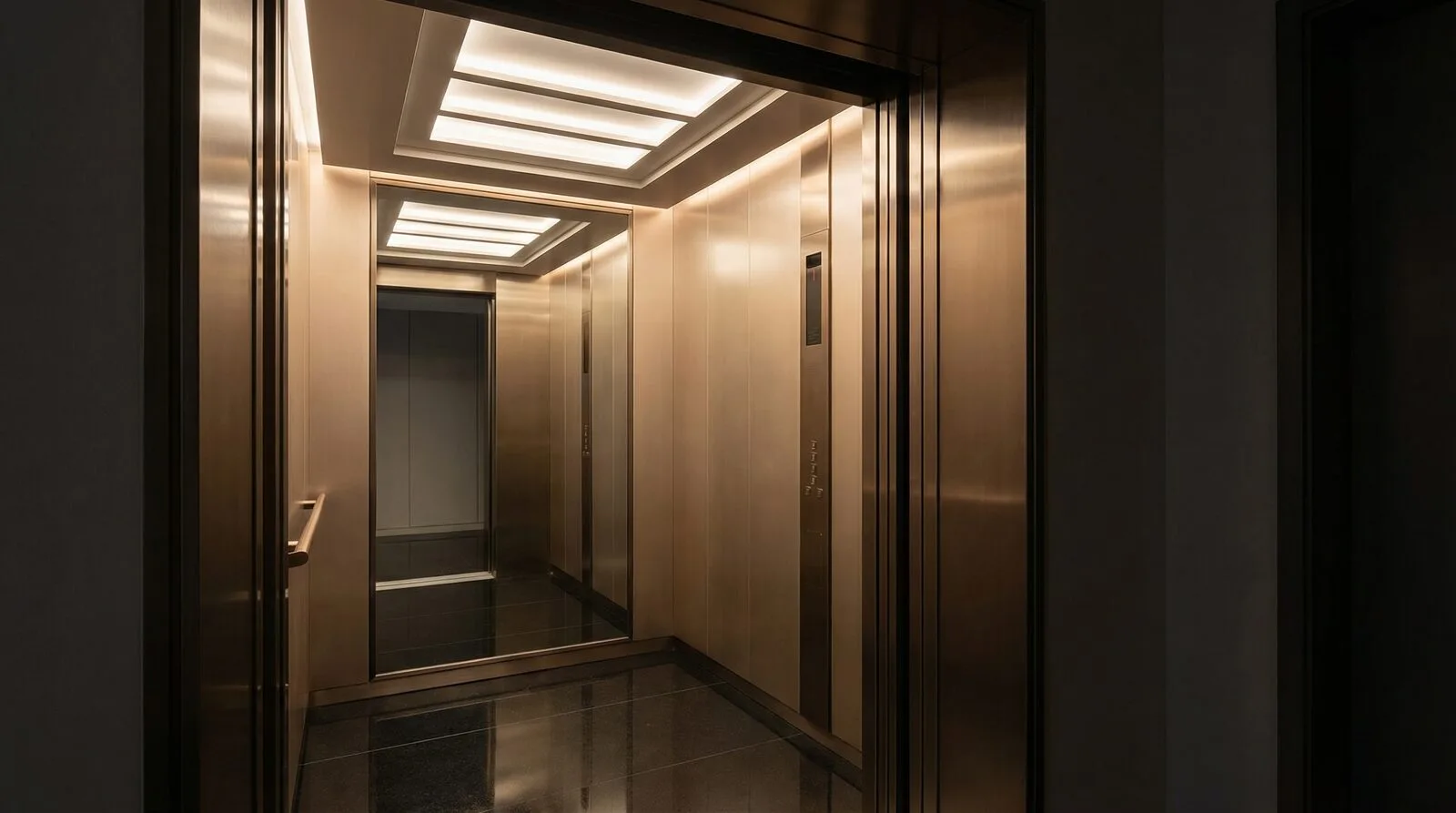
Is a platform lift a passenger lift?
Yes — in the sense that matters, a platform lift is a lift for passengers: it carries people, wheelchairs and companions vertically between floors of a building. The distinction is regulatory and mechanical, not about who rides it. A conventional passenger lift is built to EN 81-20/50 — the standard for faster, higher-capacity lifts serving taller and busier buildings. A platform lift is built to EN 81-41, runs at a controlled 0.15 m/s, and is engineered to install with minimal building work. If your building is low-rise, the honest question is not "platform or passenger?" but "how much lift does this building actually need?"
The real differences at a glance
| Platform lift (EN 81-41) | Conventional passenger lift (EN 81-20) | |
|---|---|---|
| Carries people | Yes — incl. wheelchair users and companions | Yes |
| Speed | Controlled 0.15 m/s | Faster — suits high-traffic buildings |
| Pit | Shallow 150mm | Deep excavated pit |
| Shaft & machine room | Self-supporting structure, no machine room | Structural shaft, often a machine room |
| Time on site | 3–5 days | Typically 6–12 weeks |
| Travel range | Up to 15m and 6 stops | Unlimited in practice |
| Best for | Low-rise homes and commercial buildings | High-rise, high-traffic buildings |
When a platform lift is the right passenger-lift choice
Most of the UK's building stock is two to four storeys — shops, offices, surgeries, schools, restaurants, care settings and homes. In these buildings a platform lift specified as the passenger-lift alternative delivers the same day-to-day function: an enclosed car, full-height doors, smooth quiet travel and accessible controls, carrying up to 400kg. What it removes is the cost and upheaval that come with a conventional lift — the excavation, the shaft construction, the machine room and the weeks of programme. It satisfies Part M and Equality Act duties for public and commercial use, which is what the specification actually has to achieve.
When you genuinely need a conventional passenger lift
Honesty matters more than a sale: if your building is high-rise, moves heavy passenger traffic all day, or needs the speed and capacity only a traction lift provides, a conventional passenger lift is the correct specification — and we will tell you so. Base OnLevel specialises in platform lifts; we would rather point you to the right product than mis-specify our own. For everything below that threshold, the comparison above almost always resolves in the platform lift's favour.
Can one lift carry passengers and goods? The dual-use combination lift
This is where the OnLevel platform lift is genuinely unique in the UK: the commercial combination lift is the only UK platform lift licensed to carry passengers and light goods together under a single unit and a single warranty. In practice that means the same lift moves your customers, your staff, the stock delivery and the laundry trolley — without a separate goods lift, and without using the lift for goods quietly voiding a passenger-only warranty, a common trap with other products. It is the configuration our customers in shops, cafés, care settings and multi-storey townhouses choose most, precisely because carrying things between floors is the daily problem a lift is bought to solve.
Do platform lifts meet passenger-lift regulations?
A platform lift is not a lesser regulatory citizen — it is certified under its own harmonised safety standard, EN 81-41, is CE marked, and supports Part M of the Building Regulations, BS 8300:2018 and the Equality Act 2010 for public and commercial buildings. Like any lift that carries people, it takes a six-monthly LOLER thorough examination in workplace settings, and every Base OnLevel installation is commissioned with a full LOLER handover by our SafeContractor-accredited engineers (CN8516). See our building regulations guide for the full picture.
What about cost and installation?
Because the platform lift removes the shaft, the deep pit and the machine room, most of a conventional lift's cost and disruption never enters the project. The OnLevel unit arrives factory-built around nine weeks after order and is installed, commissioned and handed over in three to five days. Pricing is set by travel height, configuration and finish rather than a fixed scale — our cost guide explains the factors, and a written, no-obligation quotation puts a firm figure on your building.
Find a platform lift installer in your area
We install and service OnLevel platform lifts across England, with dedicated local pages for hundreds of towns. Explore the areas we cover — including London, Surrey, Kent, Hertfordshire, Buckinghamshire, Berkshire, Cheshire, Greater Manchester and Essex — or browse the full list of locations across the UK.
Popular towns we cover include Milton Keynes, Coventry, Watford, Bromley, Marylebone, Sutton, Rochdale, Cheshunt, Welwyn Garden City, Sevenoaks, Wellingborough, Beverley and Pontefract.
Recently updated area pages include Garstang, Highcliffe, Bath, Whitby, Morpeth, Hexham and Brampton — each with local planning notes, typical property types and the installation details for that area.
Request a no-obligation quotation
Every property is different, so the surest way to a firm figure is to tell us about your project — the property, the floors you need to serve and what you want to achieve. Send us those details and our SafeContractor-accredited team will prepare a written, no-obligation quotation. Request your quotation on our contact form, or see the areas we cover across the UK.