What "ageing in place" actually means
“Ageing in place” is the simple idea of staying in your own home as you grow older, rather than moving to a bungalow, into sheltered housing or into residential care. Most people would far rather do exactly that — keep the home, the neighbours and the routines they know. Adapting a house you already own is usually cheaper, and far less upheaval, than selling up and moving, and it avoids the ongoing cost of care for as long as possible.
The stairs problem — and your options
When the stairs become the obstacle, there are really five options, and each has its place:
- Move to a bungalow — removes stairs entirely, but means leaving your home and neighbourhood, and the buying and moving costs are high.
- Live downstairs — converting a reception room to a bedroom with a downstairs bathroom can work, but it sacrifices living space and the whole upstairs of the house.
- Stairlift — the cheapest, quickest fix for someone who can transfer onto a seat, but it cannot carry a wheelchair and it occupies the staircase.
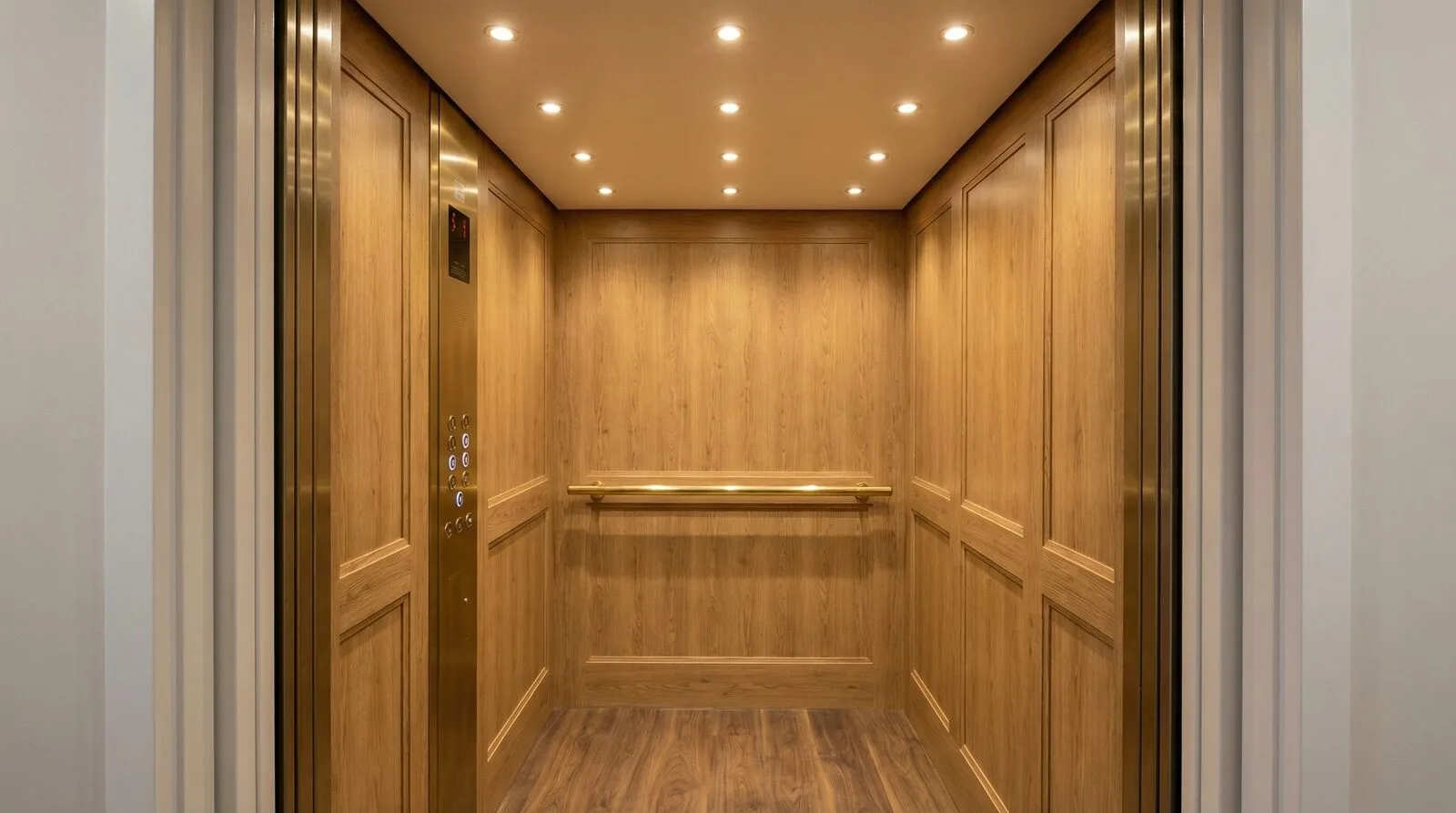
- Home lift — a small, enclosed lift beside or near the stairs that carries you, and a wheelchair or frame, between floors.
- Through-floor lift — a home lift that travels straight up through the ceiling where there is no room for a separate lift position.
Why a home lift suits ageing in place
For staying put over the long term, a home lift has real advantages. It future-proofs the house: it still works if you later need a wheelchair or a mobility scooter, which a stairlift may not. It leaves the staircase completely clear for everyone else in the home. Because it adds genuine accessibility, a home lift tends to add more to a property’s value than a stairlift, and appeals to the growing number of buyers looking for a home they can stay in. Above all, it lets you move between your own floors with dignity and without help.
What it costs and how it is funded
A home lift is priced to the property rather than from a fixed scale — travel height, the model and finish, and any site work are the main factors, and a two-storey home lift is the most economical. Our platform lift cost guide explains what drives the figure. You may not have to pay all of it yourself: the means-tested Disabled Facilities Grant can contribute up to £30,000 where a lift is needed for a disabled person, and mobility lifts installed at home are usually zero-rated for VAT.
How disruptive is it? The installation
The worry people raise most often is disruption — and with a modern home lift it is largely unfounded. An OnLevel lift arrives factory-built, sits in a shallow 150mm pit rather than a deep excavation, needs no machine room, and is typically installed in three to five days. There is no weeks-long building project and no need to move out. That low-impact, largely reversible fit is exactly why a home lift suits an occupied home, and older or listed properties, so well.
When to plan it
The best time to plan a home lift is before it becomes urgent — not in the aftermath of a fall or a hospital stay. If someone in the household is finding the stairs harder each year, it is worth looking at the options early, while there is time to choose calmly. An occupational therapist can assess needs and start any grant process, and because a home lift is a low-impact, reversible change, it is a safe decision to make ahead of time rather than under pressure.
Find a platform lift installer in your area
We install and service OnLevel platform lifts across England, with dedicated local pages for hundreds of towns. Explore the areas we cover — including London, Surrey, Kent, Hertfordshire, Buckinghamshire, Berkshire, Cheshire, Greater Manchester and Essex — or browse the full list of locations across the UK.
Popular towns we cover include Milton Keynes, Coventry, Watford, Bromley, Marylebone, Sutton, Rochdale, Cheshunt, Welwyn Garden City, Sevenoaks, Wellingborough, Beverley and Pontefract.
Recently updated area pages include Stourbridge, Wallasey, Carterton, Dudley, Sandwich, Dereham and Wellington — each with local planning notes, typical property types and the installation details for that area.
Request a no-obligation quotation
Every property is different, so the surest way to a firm figure is to tell us about your project — the property, the floors you need to serve and what you want to achieve. Send us those details and our SafeContractor-accredited team will prepare a written, no-obligation quotation. Request your quotation on our contact form, or see the areas we cover across the UK.